7 Skin Method: Why It Only Works With a Korean-Style Toner
Ever wonder why some K-beauty routines call for applying toner seven times in a row, when doing that with the toner sitting in your own bathroom would probably leave your face pink and stinging by round three?
The gap isn't about which bottle is "better." It comes down to what the word toner actually means in each country. I pulled the real ingredient lists on a Korean hydrating toner and a classic American witch-hazel one to see exactly how different the two products are, and the label explains why one of them can go on your face seven times and the other really shouldn't.
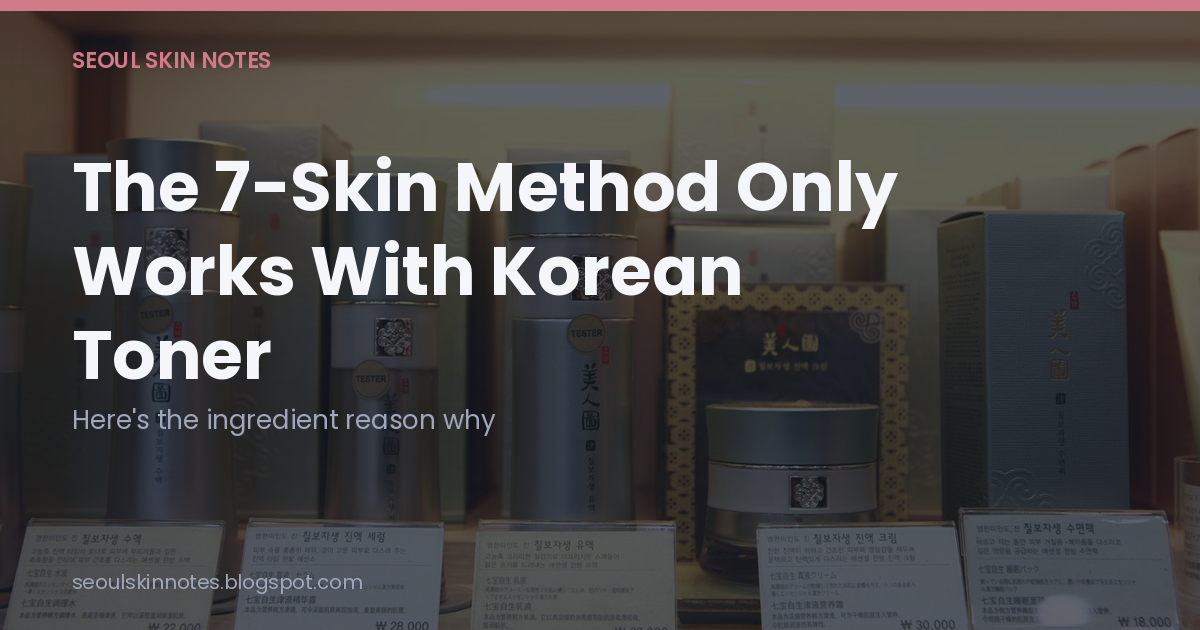
"Skin" Is the Korean Word for This Bottle
In Korea, this product isn't sold as a toner at all. It's sold as 스킨, or "skin" — as Glow Recipe explains in its own breakdown of the Korean routine, a brand two former L'Oréal skincare veterans built specifically around importing and explaining Korean products for a US audience. The name gives away the job: a "skin" is the first leave-on hydration step after cleansing, meant to replace the water your face just lost at the sink, not to finish a cleaning job the face wash already started.
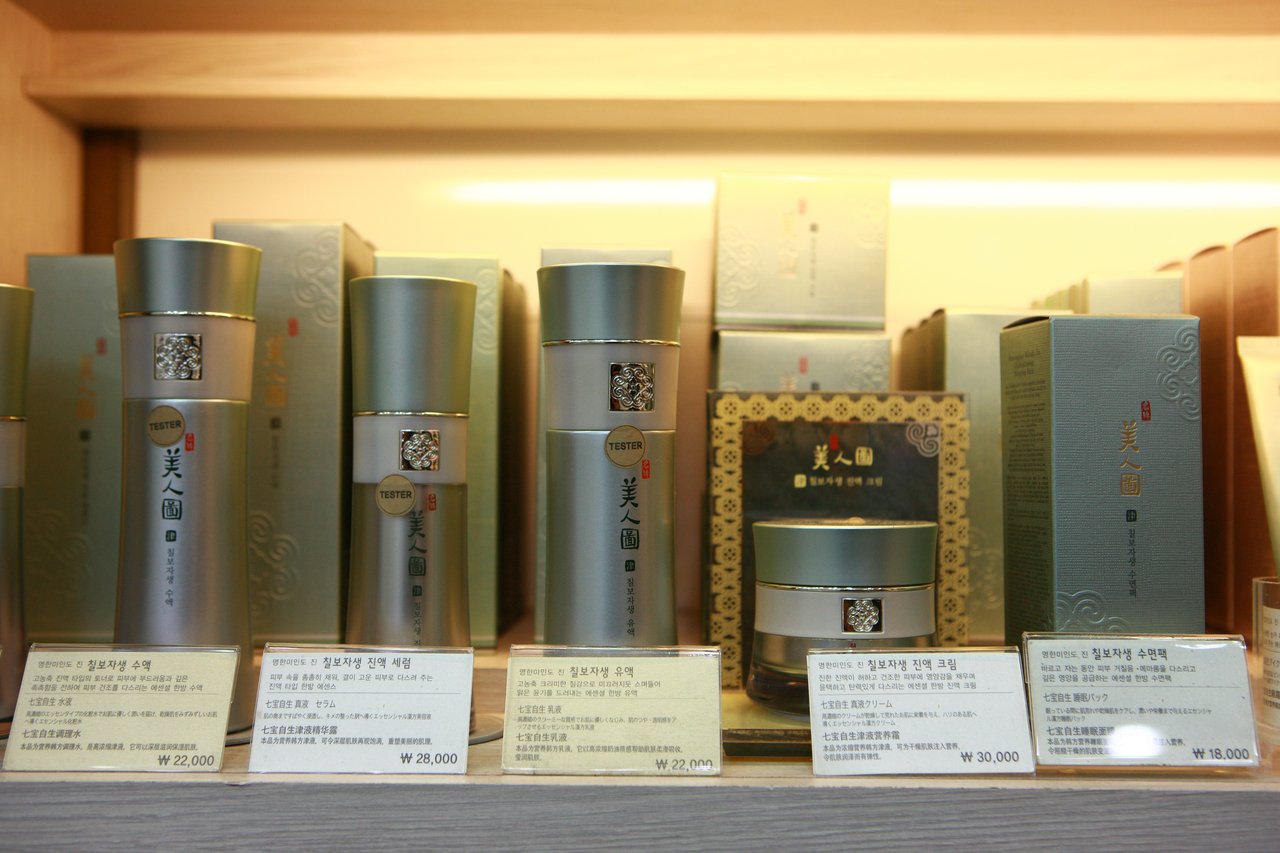
Dr. Jane Yoo, a board-certified dermatologist and Mohs surgeon at Mount Sinai's Icahn School of Medicine, draws the same line from the medical side: Western toner "historically prioritized astringency," built to strip residual oil and tighten the appearance of pores, while Korean toner works from "the opposite principle" of hydration first. She also flags something worth sitting with — the old claim that toner makes pores "open and close" was, in her own words, "never accurate to begin with." The wipe-and-tighten ritual a lot of people in the West grew up with was built on a premise dermatology doesn't really stand behind anymore.
Two Very Different Ingredient Lists
Theory only gets you so far, so I checked the label. Here's the full INCI list for Klairs' Supple Preparation Facial Toner, a Korean hydrating toner popular enough to be a near-default starter recommendation, next to Thayers' Rose Petal Witch Hazel Facial Toner, the alcohol-free version of the American drugstore staple.
- Klairs: 50 ingredients. Water first, then straight into humectants and extracts — butylene glycol, betaine, licorice root, centella asiatica, panthenol, sodium hyaluronate, beta-glucan. No alcohol anywhere on the list. The only ingredients doing a scent job, six essential oils, don't show up until positions 33 through 38, near the very bottom of a 50-item list.
- Thayers: 9 ingredients, total. Witch hazel bark/leaf/twig extract sits at position 2, right after water, meaning it's one of the more concentrated things in the whole bottle rather than a trace botanical. Fragrance lands at position 7 of 9, which sounds late until you notice there just aren't many ingredients left to rank against.
That second point matters. A 9-ingredient formula and a 50-ingredient formula can't be read on the same scale. Witch hazel at #2 of 9 is doing real, active work on your skin. An essence oil at #35 of 50 is closer to a rounding error.
Price backs up the different-job read. Thayers' own site lists the 12 oz (355 mL) Rose Petal toner at $10.95. Soko Glam, a US retailer built around Korean imports, lists the 180 mL Klairs bottle at $21.99 — both prices as of early September 2026. Work that out per milliliter and Klairs runs almost four times what Thayers does. You're not paying more for a fancier version of the same product. You're paying for a formula built to be reapplied without punishing your skin for it.
Does Layering It Seven Times Do Anything?
Dear, Klairs' own explainer on the technique argues that a few thin passes let hydration "settle before the next layer arrives," building up gradually instead of sitting on top the way one heavy application can. Worth being upfront about this: that's the brand's own explanation of its own product, not a claim backed by an independent study. The page cites no research, and I didn't find the mechanism traced to a clinical trial anywhere else either. It's a plausible use of a genuinely humectant-heavy formula. It isn't proven science, and nobody selling the toner claims otherwise once you read past the marketing copy.
None of this works with a witch-hazel formula, though. Layering an astringent seven times doesn't build gentle hydration — it repeats a stripping step seven times on the same patch of skin, back to back. If your face starts feeling tight by the third pass, that's not a sign to push through to seven. It's the ingredient list telling you this particular bottle was never built for repeat contact.
What This Means for Your Routine
If the only toner on your shelf is a wipe-off astringent, skip this entirely — you'll just irritate a formula built for one pass, not seven. If you've already got an alcohol-free, humectant-based Korean toner sitting half-used in your cabinet, this is the actual use case for it: not a nightly seven-pass ritual, just the occasional night your skin looks a little flat and you've got five extra minutes to spare. Three or four light layers, patted in rather than wiped on, is a realistic place to start. Save the full seven for the nights you're genuinely not in a hurry, and stop the moment it stops feeling worth it.
This is a running news series, not a one-off post — new stories go up twice a day, roughly 7am and 7pm Korea time.
More Korea coverage from our network: Hallyu Now · Korea Travel Planner · K-Sports Global · Korean Table


Comments
Post a Comment