What 5,000 Won Buys on Daiso's Skincare Shelf
Tonymoly's Daiso-only brand Bonsep put six NMN skincare products into Daiso on September 15. They arrived inside a five-day new-arrivals event that Daiso's own online mall had opened the day before, about 200 items, whose beauty lineup was those six plus a five-piece VT PDRN 톤온 line and a six-piece Dr. Oracle line. Nothing in those lines costs more than 5,000 won, the top rung of Daiso's price ladder.
Bonsep is a Daiso-only label, so its products exist on Daiso's shelves and nowhere else, which is awkward if you are the reader I have in mind here: someone abroad who already knows VT or Tonymoly from an importer's website. I went looking for an official export route to the Daiso range and came up empty. Proxy-buying sites resell the same 5,000-won toner at a markup plus shipping. The real question sits somewhere else. Does the 5,000-won bottle contain the same thing as the brand's own?

Six prices, and one of them is the ceiling
Daiso prices everything at 500, 1,000, 1,500, 2,000, 3,000 or 5,000 won. Bizhankook's May 2026 report on the chain's beauty push traces how fast that shelf filled up: roughly 60 brands and 500 products at the end of 2024, about 150 brands and 1,420 products a year later, around 170 brands and 1,900 products by April 2026. Beauty revenue grew about 70% in 2025 over 2024, then another 30% year-on-year in the first four months of 2026.
The same report breaks 2025 cosmetics sales down by age. Shoppers in their forties made up about 29%, thirties 24%, twenties 21%, fifties 18%. I keep going back to that split, because it is not the shelf a teenager raids on a Friday.
25 won a millilitre
One VT toner already sitting on that shelf has a flagship counterpart to price against. Daiso's mall lists VT PDRN 광채 토너 200 ml at 5,000 won. VT's own store lists 피디알엔 토너, 250 mL, at 15,000 won. That is 25 won per millilitre against 60. Millilitre for millilitre, the brand's own bottle costs 2.4 times as much. At about 1,380 won to the dollar, the rate Trading Economics quoted at 1,379.03 on September 17, you are comparing roughly $3.60 with roughly $10.90.
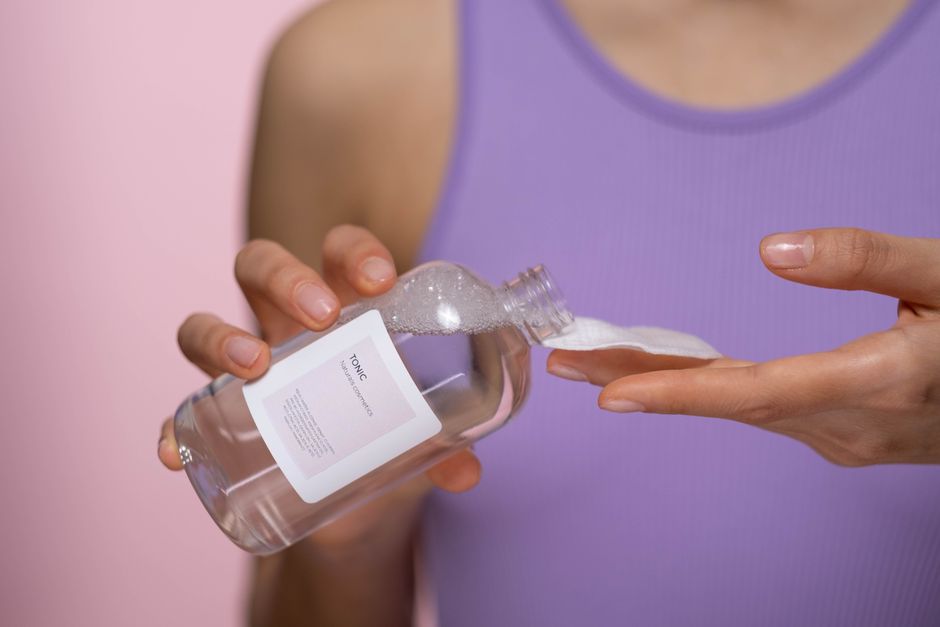
The flagship page publishes its full ingredient list. Niacinamide sits fifth, cultivated wild ginseng extract is in there, and the PDRN appears as sodium DNA with a figure printed beside it: 0.25 ppm. VT describes the product as a 산삼 유래 PDRN toner, PDRN drawn from wild ginseng rather than from the salmon and trout that most PDRN skincare uses.
Daiso's page for its version prints the label name, the volume and the price. No ingredient list, no manufacturer, and the same again for VT PDRN 광채 선 에센스, 50 ml, 5,000 won. So I can compare price per millilitre between the two bottles. I can't compare what is in them.
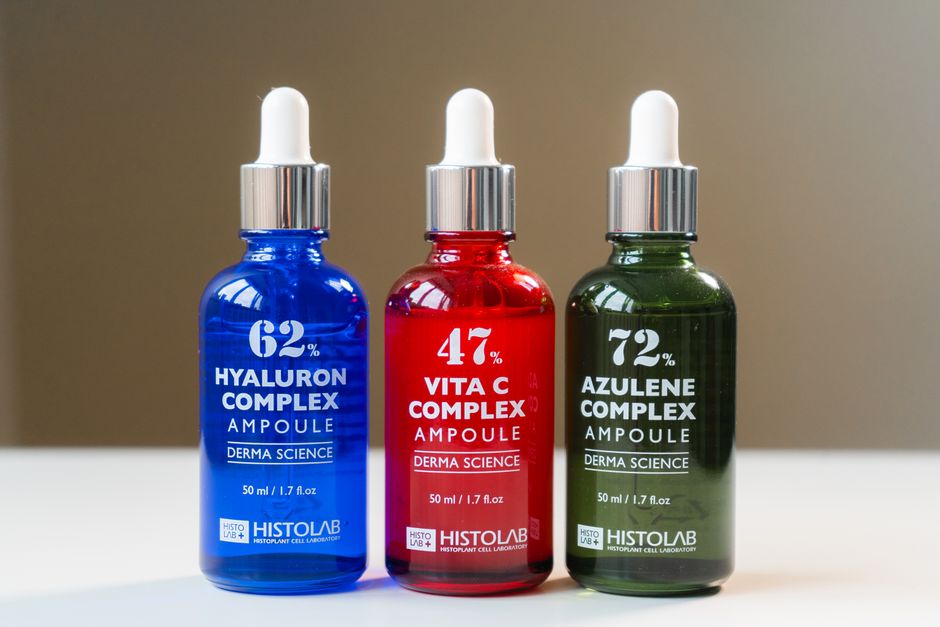
The 1% on the front of the ampoule
Bonsep's new line runs to six products: a 1% ampoule, a cream, a whip first essence, a gua sha serum, a dressing cream mask and a repair cover cream. The press release describes low-molecular NMN combined with NAD+ at 99% purity, plus ten peptides, resveratrol, ferulic acid and retinol, and states that the ampoule contains 1% NMN. 한국섬유신문 reported 10 million cumulative Bonsep units sold as of January 2026, on Tonymoly's own count, since the brand entered Daiso in April 2024, across about 50 products.
Put that 1% beside VT's 0.25 ppm and you can see how much ground the phrase "contains the ingredient" covers. 0.25 ppm is 0.000025%. Both figures are honest disclosures printed by the companies themselves, roughly 40,000-fold apart.
Four write-ups of the Bonsep launch, one of them carrying test figures. Wikitree runs five, all on the cream: after four weeks, a 14.6% gain on a durability measure that holds the elasticity effect for 48 hours, then volume up 23.5%, fine wrinkles 20.8%, lifting 19.6% and inner moisture density 18.1%. How many people, against what control, is nowhere. 한국섬유신문 goes as far as saying an outside institution ran human application tests on some of those categories, without naming it. The press release and 코스모닝 carry no test figures at all, so I would file the 14.6% as a formulation note rather than something you will spot in a mirror.
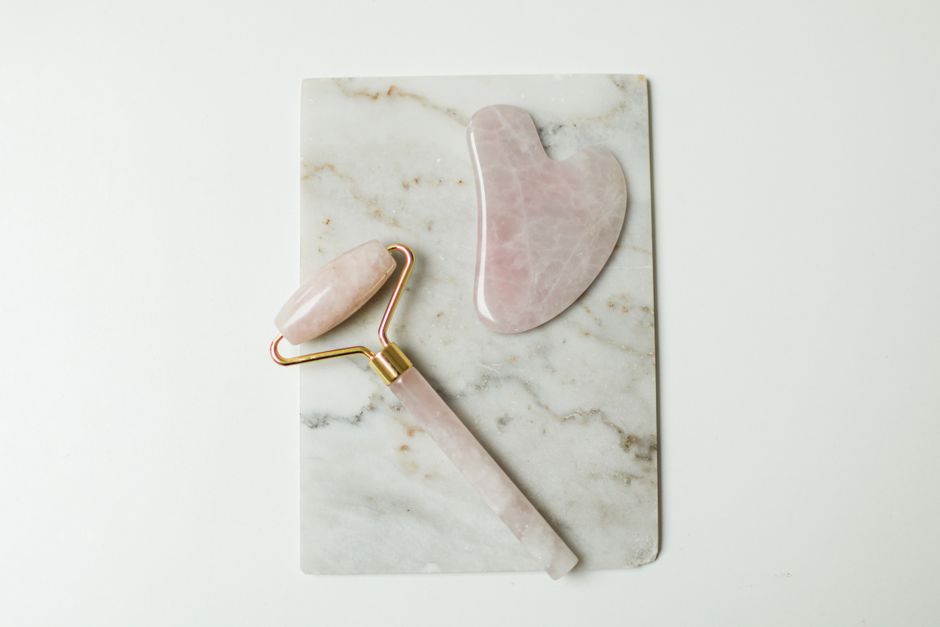
The gua sha serum uses a 360-degree stainless double-ball applicator, and the dressing cream mask separates its eye and mouth sections so the offcuts can go on the neck or between the brows.
A 5,000-won cap still leaves room for that kind of thing.
Checking one of these before you pay a reseller
Two public pages will settle most of it. Search the product name on daisomall.co.kr and you get the exact label name, the volume in mL and the price. That is enough to run the per-millilitre arithmetic against whatever your local importer charges. On that VT toner, 25 won per mL is the number to beat.
Then open the brand's own mall and find the nearest flagship SKU. The full ingredient list lives there, in descending order of content, occasionally with a ppm figure attached. For the Daiso SKU, that flagship list is the only baseline I have.
Nobody publishes the Daiso version's own ingredient list. I opened both VT product pages on Daiso's mall and that field simply isn't on them. If someone tells you the 5,000-won bottle is the flagship formula in cheaper packaging, ask where they read it, because I couldn't find it.
A Daiso in your own city is probably a different company, by the way. The Korean chain has been wholly Korean-owned since December 2023, when parent Asung HMP bought out the 34.21% stake held by Japan's Daiso Sangyo for around 500 billion won and took its own holding from 50.02% to 84.23%. Whichever Daiso sits near you outside Korea is almost certainly the Japanese chain, and I could not find a Korean-run Daiso store anywhere outside Korea.
Anyone who has run a Daiso-exclusive line against the brand's flagship bottle side by side, I'd like the honest verdict. Which one did you finish first?
This is a running news series, not a one-off post — new stories go up twice a day, roughly 7am and 7pm Korea time.
More Korea coverage from our network: Hallyu Now · Korea Travel Planner · K-Sports Global · Korean Table


Comments
Post a Comment