PA++++ vs SPF: What Your Sunscreen Label Isn't Telling You
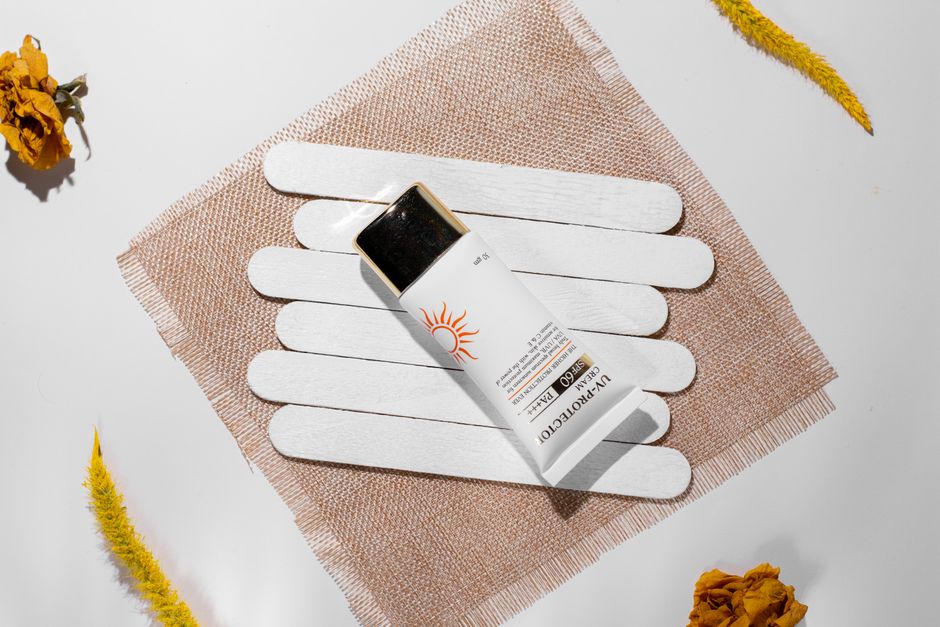
Round Lab's Birch Juice sunscreen carries a PA++++ rating on the box sold in Korea. The version sold through Round Lab's own official US site doesn't carry that rating at all — same product line, same name, and a noticeably lower SPF number (45+ instead of 50+) to go with the missing UVA grade. Nothing was recalled and nothing is unsafe. The two bottles are simply different formulas, and the label change is the only clue most people ever get.
That gap comes down to two testing systems that measure different things and don't talk to each other. If you've ever squinted at a Korean sunscreen box wondering what those plus signs mean, or wondered why your local drugstore SPF never carries one, here's what's going on underneath the label.
What PA Measures
PA stands for Protection Grade of UVA, and it's the rating system Korea and Japan use to tell you how much of the sun's UVA range a sunscreen blocks — the wavelengths tied to collagen breakdown, hyperpigmentation, and long-term photoaging, as opposed to the UVB rays that cause a sunburn. It comes from a test called Persistent Pigment Darkening, or PPD: researchers apply sunscreen to skin, expose it to UVA, and measure how much longer it takes to develop a faint tan compared with bare skin.
The scale runs in four steps, laid out by Dr. Jane Yoo, a board-certified dermatologist and Mohs surgeon practicing in New York: PA+ means a PPD of 2 to 4, PA++ is a PPD of 4 to 8, PA+++ is 8 to 16, and PA++++ covers anything above a PPD of 16. Four plus signs is the ceiling — there's no PA+++++ waiting one tier up, whatever the marketing copy implies.
The US Doesn't Have an Equivalent, and That's Not an Accident
American sunscreens carry "Broad Spectrum" instead, and it's a different kind of measurement entirely. The FDA runs its own critical wavelength test under 21 CFR 201.327(j) — built on the same principle as the international ISO 24443 method, though not identical to it: a thin layer of product goes on a transparent plate, a spectrophotometer reads how much UV it absorbs across the spectrum, and a product passes if that curve reaches a critical wavelength of at least 370 nanometers. That's a pass/fail line, not a scale. A sunscreen that barely clears 370nm and one that clears it by a wide margin both just say "Broad Spectrum," full stop.
PA's PPD test, run on real human skin rather than a lab plate, isn't currently recognized under the FDA's sunscreen framework, which is why you won't find it on a US label even when the underlying UV filters would earn a PA++++ grade elsewhere. Part of it is philosophical, too: Korea and most of the world regulate sunscreen as a cosmetic, while the US treats it as an over-the-counter drug, which locks in a much shorter list of approved active ingredients. Round Lab said it plainly on their own site when explaining why their US and Korean formulas diverge:
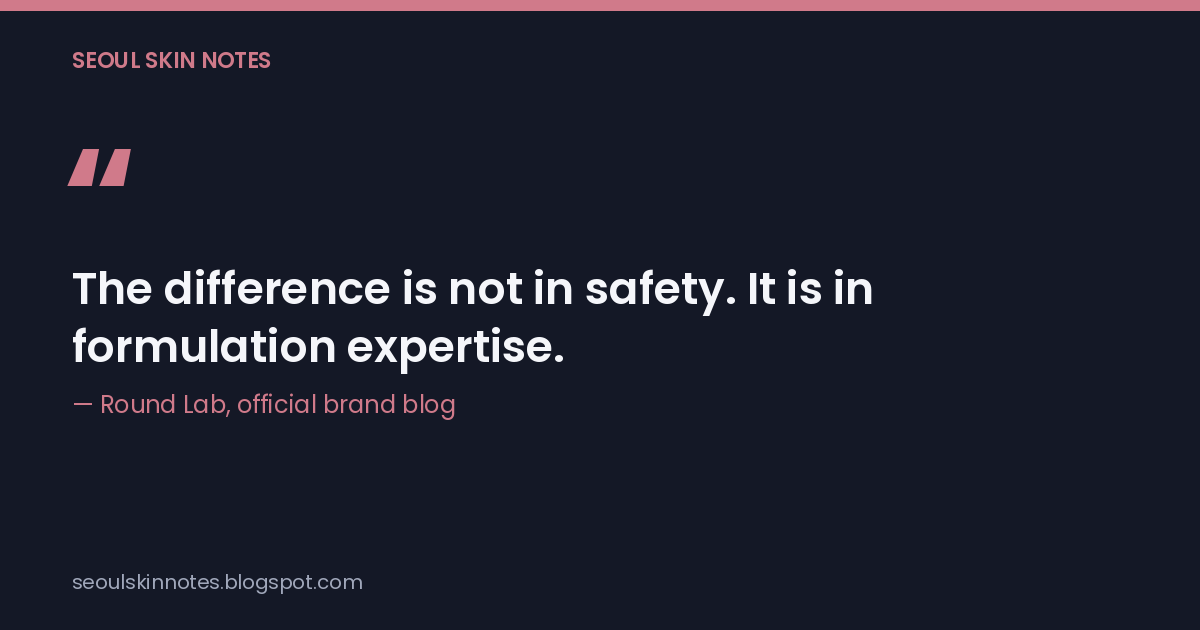
Worth sitting with that for a second, because "formulation expertise" is doing a lot of work in that sentence — it's the polite version of "we had to rebuild the sunscreen around a shorter ingredient list."
Same Bottle, Different Chemistry
Round Lab's Korean-market formula for the Birch Juice sunscreen uses Uvinul A Plus, Uvinul T 150, and Tinosorb M — the filters Round Lab's own product guide names for the line — to hit SPF50+ PA++++. The FDA drug label on file for the version sold through Round Lab's US site shows the actives swapped to avobenzone, homosalate, and octisalate, labeled SPF45+ Broad Spectrum — a real drop in both the SPF number and the UVA grading, not just a cosmetic label swap. Round Lab chose to keep selling in the US and rebuilt the formula around what the FDA allows.
Beauty of Joseon took the other path. Relief Sun: Rice + Probiotics, one of the brand's most-searched sunscreens, relies on the same Tinosorb-family filters, and rather than reformulate it for FDA approval, the brand has largely kept it off official US retail altogether — Cosmi's beauty desk reports the brand has said it plans FDA-approved versions down the line, but for now what shows up on US-facing sites is import stock from resellers like StyleVana and YesStyle, operating outside FDA's domestic drug framework, still carrying the original Korean formula and its PA++++ rating.
None of this makes either version unsafe, and I'm not going to pretend a five-point SPF gap ruins anyone's day at the beach. It does mean a lot of people buying the "same" bottle in the US are getting genuinely different things depending on the brand: an officially weaker reformulation from one, or an unofficial import of the full-strength original from the other.
How to Tell Which Version You Have
There's a fast way to check, and it doesn't require guessing based on where you bought it. A US-regulated sunscreen has to carry an FDA Drug Facts panel — if that box is on the label, you're holding the American formula, whatever the brand's home country. Flip the label instead and scan the active ingredients: names like Tinosorb S, Tinosorb M, Uvinul A Plus, Uvinul T 150, or Mexoryl XL mean you've got an international formula, almost always shipped in directly rather than sold through a US retailer.
That five-second check matters more than most routine advice on this blog, honestly, because it's the difference between assuming your sunscreen does something it doesn't and actually knowing.
Does the Difference Change What You Should Buy
If you deal with melasma or stubborn post-acne marks, I'd prioritize the higher, verified PA rating over convenience — direct import through a site like Olive Young Global gets you the graduated UVA number instead of a pass/fail label, and that specificity is genuinely useful when UVA exposure is the thing making your pigmentation worse. If your skin is on the calmer side and you just want daily protection without customs shipping or a longer wait, the US-compliant version, applied properly and reapplied on schedule, is not the downgrade a lot of skincare forums make it sound like. The chemistry changed. Whether that change matters to you depends on what you're actually trying to fix — not on which bottle looks more like the one your favorite reviewer held up on camera.

Next time a Korean sunscreen box in your cart doesn't list PA anywhere, that's not a missing detail. It's telling you exactly which version you're about to buy — you just have to know to look.
This is a running news series, not a one-off post — new stories go up twice a day, roughly 7am and 7pm Korea time.
More Korea coverage from our network: Hallyu Now · Korea Travel Planner · K-Sports Global · Korean Table


Comments
Post a Comment