Mugwort in K-Beauty: What's Been Measured, Not Marketed
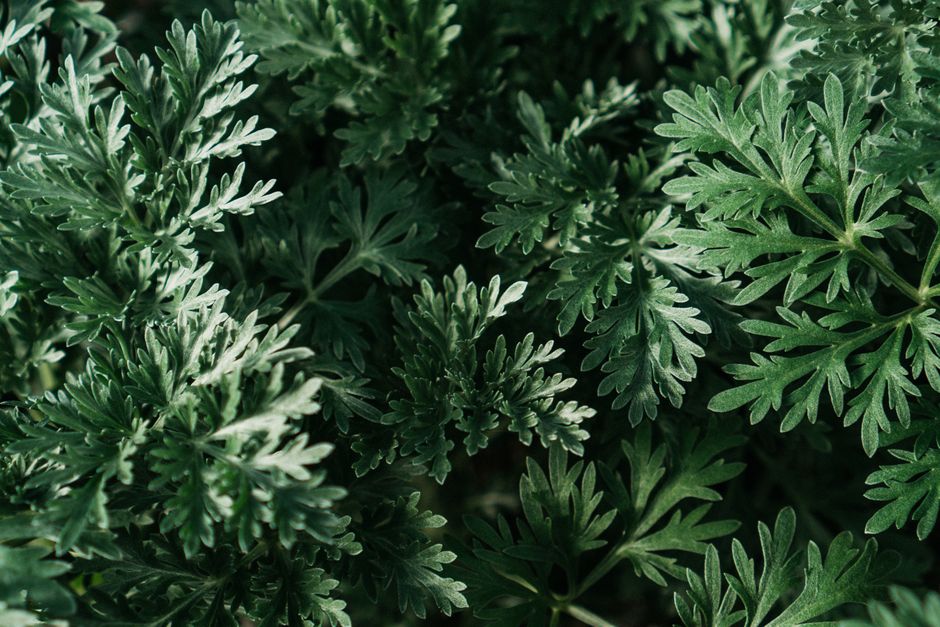
I'm From's Mugwort Essence lists six ingredients. The second one, right after water, is Artemisia Princeps Extract, mugwort, the same plant burned in Korean moxibustion and steeped for 쑥차 (mugwort tea). On the brand's own product page, that ingredient is credited with "stimulating collagen production" and "combating damage from environmental aggressors," on top of the usual soothing claim. Does the science back that up, or is the word "mugwort" carrying the marketing on its own?
What's Been Published
I searched PubMed, Google Scholar, and the Korean databases KCI and RISS for a randomized or placebo-controlled human trial using topical Artemisia princeps or Artemisia argyi extract, the two mugwort species Korean brands actually use. I found none. Three separate pieces of research turned up instead, and none of them used the plain water extract sitting in your dropper bottle.
Cells in a Dish, Not Skin on a Face
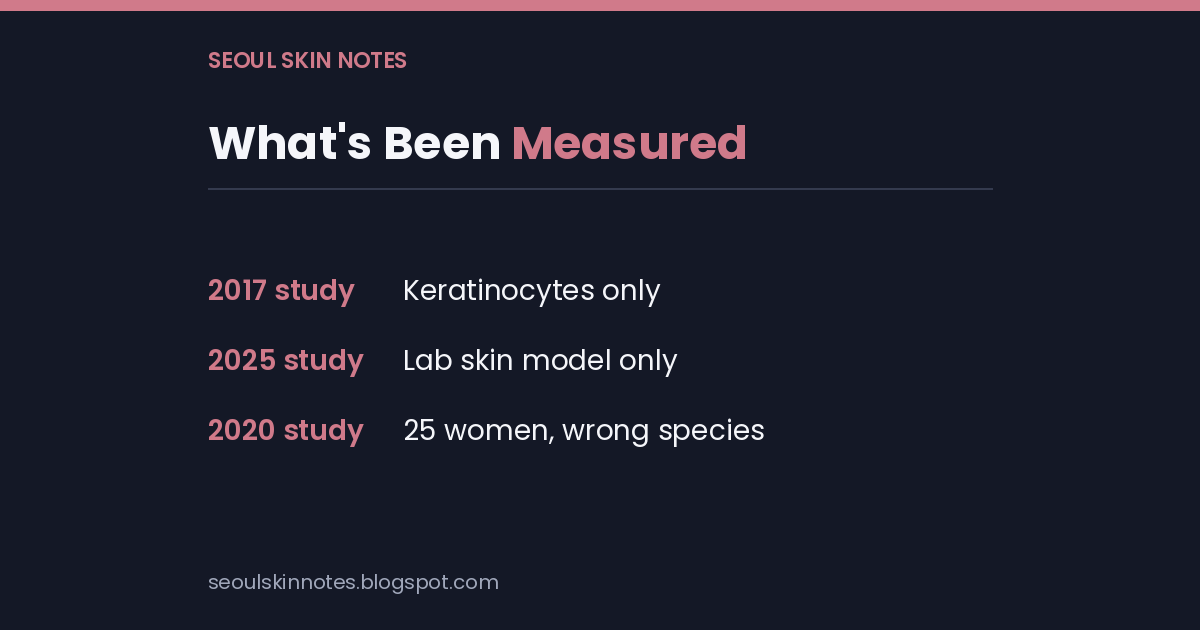
A 2017 paper from Sunstar Group's R&D division and Kyushu University's dermatology department grew human keratinocytes in culture and dosed them with Artemisia princeps extract (APE). The extract upregulated filaggrin and loricrin, two proteins skin needs to hold onto water, through a receptor pathway the paper names AHR/OVOL1. That part is real, peer-reviewed biology. The paper's abstract also states that "skin care products containing Artemisia princeps extract are known to improve dry skin symptoms in atopic dermatitis," which reads like the study's own conclusion.
It isn't. Trace that sentence to its citation, and it points to older product claims. This paper collected no data of its own from a single human volunteer.
The Collagen Number Everyone Quotes Isn't From an Extract
The study that comes closest to matching I'm From's collagen line is a 2025 paper out of the University of Brain Education and a company called Well-aging Exobio Inc. It measured type I procollagen in human dermal fibroblasts treated with APNVs — nanovesicles squeezed out of fresh mugwort leaf juice through tangential flow filtration and a 0.22 µm membrane. At 1000 ng/mL, APNVs restored procollagen synthesis by 40% after TNF-α damage, 31.5% after UVA exposure, and 66% after UVB exposure.
A nanovesicle isn't a water extract. I'm From's own ingredient list is Water, Artemisia Princeps Extract, Butylene Glycol, 1,2-Hexanediol, Sodium Hyaluronate, Ethylhexylglycerin — no filtration process named, no molecular weight, no concentration figure anywhere on the page. The fibroblast dish and the lab-grown 3D skin model in the 2025 study never touched a living human forearm either. You're buying the plain extract; the collagen number belongs to a different preparation entirely.
There's a quieter regulatory gap here too. Korea's functional-cosmetics rules name eleven categories that require pre-market efficacy data — whitening, wrinkle improvement, UV protection, hair and scalp claims, and a narrow skin-barrier-and-itching category among them. Soothing and calming sit outside all eleven. A brand can print either word on a label without filing anything with the Ministry of Food and Drug Safety, the same regulator that won't clear a "wrinkle improvement" claim or an SPF number without proof first. No submission. No review. Just a label.
One Human Trial Exists. It Tested the Wrong Plant
One study actually clears the bar of real people, real skin, numbers over time. A 2020 paper from researchers at Yinsha Cosmetics put a mugwort-based cosmetic on 25 women, average age 35.4, for four weeks. Cheek hydration rose 63.9% at one week and 73.8% at four weeks (p<0.01). Transepidermal water loss dropped 21.5% (p<0.05). A redness marker, heme concentration, fell 69.1% (p<0.01).
Those numbers belong to Artemisia annua, sweet wormwood, not the princeps or argyi species Korean brands use. There was no placebo arm and no control group. Two of the three authors listed the same cosmetics company as their employer on the paper.
Why "Ganghwa" Shows Up on Some Labels
A few brands name Ganghwa Island mugwort specifically instead of just "grown in Korea." Ganghwa County's mugwort earned South Korea's 16th geographic indication registration from the National Agricultural Products Quality Management Service in August 2006, according to a local paper's report from that week. Boseong green tea and Icheon rice carry the same kind of registration, which exists to stop other regions' mugwort from being sold under Ganghwa's name. The registration confirms where the plant grew. Nothing in that paperwork tests what the bottled extract does on skin.
Should You Still Buy It?
Probably, if a mild hydrating, soothing toner is what you're after. The barrier mechanism from the 2017 study is plausible biology, the 25-woman trial leans the same direction despite its flaws, and generations of Korean home remedies didn't reach for this plant at random. None of that reaches "stimulates collagen production" on a specific $40 bottle.
At roughly 1 mL a use on a cotton pad once a day, a 160 mL bottle lasts about five months, pricing this essence near $8 a month. That's a fair rate for a well-made toner. Whether it's a fair price for an untested collagen mechanism is a separate question, and the label won't answer it for you.
If you've found an actual controlled human trial on topical Artemisia princeps or argyi that my search missed, send it over — I'd rather fix this post than leave the gap standing.
This is a running series, not a one-off post — a new post goes up every day, at around 1am Korea time.
About · Contact · Privacy Policy
Read next: What Is PDRN in Skincare? The Salmon DNA Behind the Hype · What 5,000 Won Buys on Daiso's Skincare Shelf · Toner vs Essence vs Serum vs Ampoule: What Korean Brands Mean


Comments
Post a Comment